
3 Powerful Beginner Flute Exercises for Tone and Control
Every great flute player starts with just a few simple skills. So no matter where you are right now, you can begin building those skills today with a few focused beginner flute exercises that make a big difference right from the start.
I’ll make these instructions clear and easy to follow. Whether you’re just picking up the flute or revisiting it after some time away, these exercises will set you on the right path.
In the video below, I’ll guide you through each one step by step. You’ll also find a video and all the details right here on this page, so you can follow along and start your practice with purpose each day.
Why Beginner Flute Exercises Matter
Every flute player wants to sound beautiful and feel confident. The key to getting there is having the right foundation in place. That’s exactly what beginner flute exercises are for. They move you to gain a foundation that ends up feeling natural and very rewarding.
When you start with these simple, focused exercises, you’re not just learning notes. You’re building muscle memory, developing breath control, and creating habits that lead to clear tone and smooth technique. These early skills will support everything else you learn on the flute.
You can practice these in just a few minutes a day and still make noticeable progress. With steady attention and consistency, your sound becomes clearer, your fingers feel more reliable, and you’ll enjoy playing because you like how you sound.
That’s the goal. Real progress that you can hear and feel, starting right away.
Let’s begin with the first exercise, which focuses on something most players don’t realize is essential for producing a good tone: balance.
Exercise #1 – Improve Your Flute Balance for Better Tone
Don’t skip over this section:
One of the most overlooked parts of sounding good on the flute is learning how to balance it correctly. If your flute is wobbly, slipping, or off-balance (even just slightly), your tone will show it. That’s why these first beginner flute exercises begin by helping you develop proper balance in your hands. (the flute is a slippery instrument at first!)
When your flute feels steady, everything becomes easier. Your air stream won’t be missing its target, your tone can be clearer, and your fingers can move more freely.. Not to mention that you’ll be less prone to injuries if the flute is balanced right.
This is one of the very first beginner flute exercises I teach my students, and it’s also something that any returning flute player (or someone learning alone at home) should sit up and pay close attention to.
How to Practice This Balance Exercise:
I can write until the cows come home about how to hold your flute, but you’ll learn 100x faster if you’ll watch the video I have on this page.
- Check your balance points (in this order):
- Left-hand allows the flute to balance on the ‘comfy chair’
- Right hand thumb under the F key (slightly on the bottom, back curve of the barrel)
- Right-hand pinky relax-curved on top of the D# key
- The flute resting gently on your chin
- Left-hand allows the flute to balance on the ‘comfy chair’
This position keeps your flute steady while allowing smooth finger movement.. And keeps the flute from rolling and shifting on you.
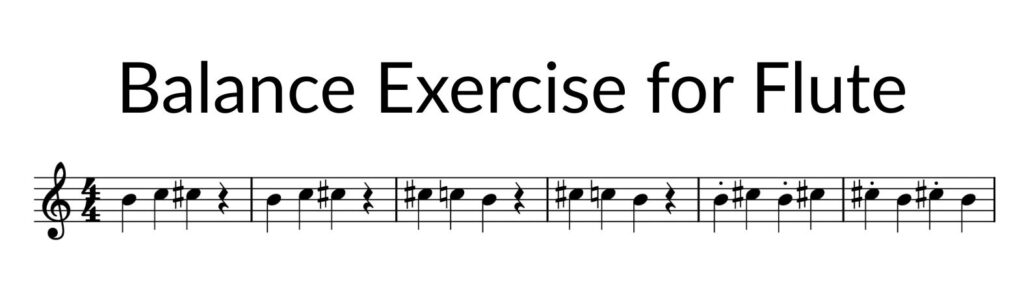
Play these notes slowly in this order:
- B → C → C-sharp
- Then reverse: C-sharp → C → B
- Repeat several times, focusing on balance points and keeping your flute from wiggling.
- Once it feels stable, try skipping:
- B → C-sharp
- C-sharp → B
- B → C-sharp
- Vary the tempo and length of your notes. Try long tones, then quick ones.
Big Tip: The place where the flute rests at the base of the Left hand index finger (but on top of the palm bone) is the key, is the key, is the key.
The Big Deal for Beginner Flute Players
This exercise may seem simple, but it builds essential control. As a beginner flute player, the more confidently you can hold your instrument, the better your tone will sound. Practicing this consistently helps you stay relaxed and focused while playing.. no more chasing a wobbly flute or feeling insecure while holding it.
This is one of the beginner flute exercises that is your first step toward developing a clear tone and smooth hand coordination.
Exercise #2: Clean Up Your Articulation for Crisp, Clear Notes
Once your flute is balanced and steady, the next step is learning how to start each note cleanly. This is called articulation, and it’s a core part of sounding polished and musical on the flute, even and especially as a beginner.
Many new flute players skip over this important skill.. Not understanding what a big deal it is, AND it makes a huge difference in how you sound. A clear, crisp start to your notes will be lead you into great tone.
Try This Articulation Exercise:
We’ll use the note B natural for this practice, since it’s one of the earliest notes a flute player should learn.
- Take a deep breath, then seal the backside of the opening of your lips with your tongue. Press your air as if you want it to come out (but don’t let it out yet)..
- Pull your tongue back quickly, letting the air burst through and create a strong, full sound. Experiment with how hard is hard enough and how hard is too hard.
- Repeat the same note over and over using this method.
- Vary the length and speed of each note. Try long, steady notes, then short, quick bursts.
- Once that feels natural, try articulating other notes like A or G. Focus on the clarity at the very beginning of each tone.
Common Mistake to Watch For:
If your tongue is moving too slowly, you might get a “brushed” or airy start to the note. It’ll sound like “thoo thoo thoo”. What you want instead is a gentle “pop” that gives the note a clear, bold beginning.
Tip: If you’ve heard of using ‘too or tah’ or ‘doo or dah’ to begin your notes.. Well, these are other methods that are out there. Also, they are not what I recommend for learning how to sound great on your flute. We can get more into this later.
Build Strength With Repetition
Set a timer and practice your articulation on a single note for 30 seconds at a time. This helps you work on consistency and helps you develop skills to clean, controlled tone that you’ll carry into every piece you play. These beginner flute exercises might feel small, but they build essential muscle memory you’ll use forever and forever as a flutist.
Exercise #3 – Learn to Play With and Without Sheet Music
Reading sheet music is a valuable skill, but many beginner flute players become overly dependent on it.. So much that they can’t play literally anything without running to get a music stand and some sheet music. This can slow progress and limit creativity. One of the best things you can do early on is to also learn how to recognize and produce notes by ear. It builds confidence, freedom, and musical awareness.
This exercise helps you start developing that skill right from the beginning.. and I’d dare say that 99% of flutists wish they had played by ear right from the get-go).
How to Practice This Exercise:
Start with just one note:
- Play the note slowly, then listen carefully to the sound it makes.
- Pay attention to how it feels when you play it. Some notes vibrate differently and you can actually feel it in your fingers or in your heart. Take time to get comfy with this idea and really listen.
- Turn off the lights and play the same note many times in the dark. This helps you focus entirely on the sound and sensation of the note.
- Experiment:
- Roll the flute slightly in and out
- Blow harder or softer
- Make short notes and long tones
- Roll the flute slightly in and out
- Once you feel comfortable with one note, try another and practice moving back and forth between the two. Do this without looking at any sheet music (and do it every day for a couple of weeks).
You’re not just playing notes. You’re learning how to feel and hear them just like when you learned to see and recognize colors. (just trust me and do it.. You might end up finding your genius!)
Build Your Musical Awareness
Treat this like a listening and thinking game. Try this: record yourself playing these two notes that you started with especially. Then close your eyes and name the note(s) you’re hearing as you play the recording. Then check to see if you’re right. Little by little, you’ll begin to recognize the notes by ear, just like you know the color red from blue (a cool phenomenon that you can learn).
These beginner flute exercises open the door to playing music more freely.. no music stand required! It’s a skill that will support everything from improvisation to playing familiar melodies by ear (like a fancy Happy Birthday for your Mom!), and it starts with just a few mindful minutes.
Daily Flute Practice Plan Using These 3 Exercises
Now that you’ve learned three powerful beginner flute exercises, it’s time to turn them into a daily habit. A structured practice routine will help you stay focused, make steady progress, and build the kind of consistency that leads to beautiful results.
Even just 7 minutes a day on these is enough to see improvement when you know what to focus on. Here’s a simple plan you can follow.
7-Minute Daily Beginner Flute Routine:
Time | Exercise | Focus |
2 min | Balance Exercise (B–C–C♯) | Keep flute steady while playing smoothly |
2 min | Articulation Practice (on B and A) | Start each note with a clear, clean pop |
3 min | Play With and Without Sheet Music | Listen closely, build ear awareness, connect finger and tone memory |
Tip: Use a timer if it helps you stay on track. Consistency is more important than length. Short daily practice builds skills much faster than long, unfocused sessions (and keeps you motivated and uninjured).
(visual)
Building a regular routine around these beginner flute exercises not only improves your tone and control, but it also gives you something to celebrate each week. You’ll know exactly what to work on and feel proud of your progress.
These 3 skills on this page are foundational for freedom in many other areas of flute playing. I’m excited you’ll be working on them!
Ready to Go Further With Your Flute Playing?
If you enjoyed these beginner flute exercises, you’re already jumping on the right path. The next step is to keep building.. one simple, supportive lesson at a time.
That’s exactly what I offer inside Learn Flute Online. You can start today in the Silver Level (the very beginning), where I’ll guide you through even more helpful techniques and beginner-friendly skills that add up like building blocks to greatness. It’s completely free and designed to help you play with ease, clarity, and joy.
When you’re ready to go for it, join us for the more complete learning experience, the Gold Level. This level gives you access to a carefully designed sequence of lessons that take you step by step through everything you need to become a solid, confident flute player. It’s flexible, motivating, and made for people just like you who want to learn at their own pace, from their own home, and on their own schedule.
You’ll also gain access to play-along videos, mp3 audios, and pdf printable sheet music (in every module!), and a supportive learning community to help you stay on track and have fun.
Whether you’re just getting started or returning to flute after many years away, Learn Flute Online will help you sound beautiful and feel proud of your progress.
👉 Get Started with the “Start Now” button on this page. Yip Yip!
These beginner flute exercises are the perfect way to start building a strong foundation in your flute playing. With just a few minutes of focused practice each day, you’ll begin to notice better tone, more control, and growing confidence in every note you play. Whether you’re brand new or picking up the flute again after some time away, these simple exercises will support your journey and keep you moving forward with joy.
Leave a comment about these 3 beginner flute exercises or tell me about the stage of flute playing you’re in right now. 🙂 -Rebecca