
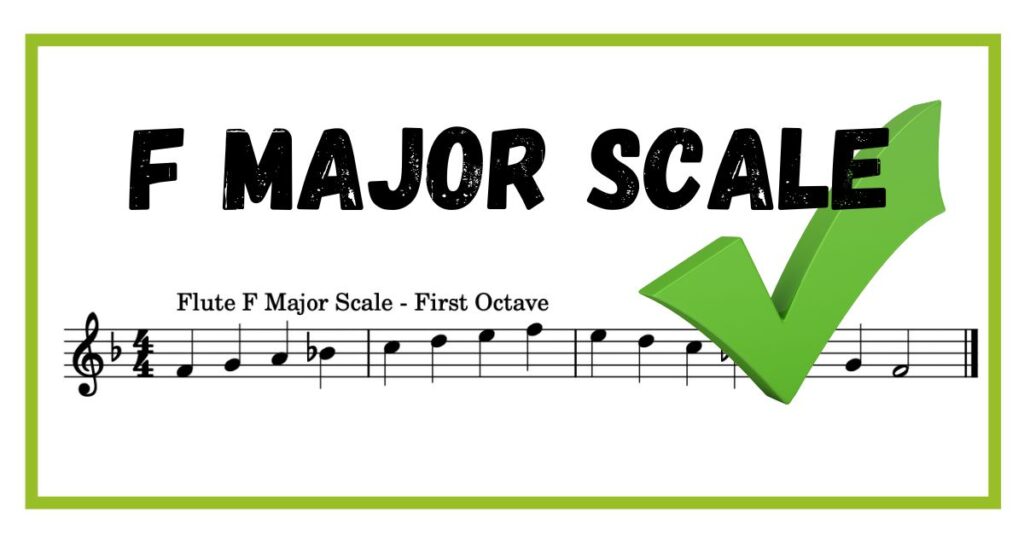
Why Learn the F Major Scale First?
If you’ve been playing flute for a few weeks or months and are ready to take your next big step, learning your first major scale is a great place to begin.
The Flute F major scale is often one of the very first full scales flute players should learn. It includes just one flat (B flat), and the finger patterns help build balance and coordination with your body and both hands.
Scales are more than just an exercise. They’re the building blocks of music. Once you understand how a major scale works and get comfortable moving between notes, you’ll find that your songs become easier to play and more fun to learn.
This article is a companion to my YouTube video lesson on how to play the F scale. You’ll find the video embedded below so you can watch and follow along. I’ve also included helpful fingering charts and images of hand positions right here in the article. Be sure to study them carefully as you go.
Let’s get started with the basics of the F major scale for flute!
What Notes Are in the F Major Scale?
The F major scale has seven different notes and follows a specific musical pattern called the major scale pattern:
Whole – Whole – Half – Whole – Whole – Whole – Half.
This pattern tells us how far apart each note is from the next. When played correctly, it creates the bright, familiar sound of a major scale. (remember the song “Do Re Mi” from the movie “The Sound of Music”? Yep.. that’s what we’re going for here.
For the F major scale, the note names are:
F – G – A – B♭ – C – D – E – F
Most of these notes use fingerings you will have been learning for your first few flute notes. The one new fingering in this scale is B flat, and it’s important to use the traditional fingering at this stage. I’ll walk you through that below.
As you continue reading, make sure to study the fingering chart and hand position images in this article to help guide your practice. Seeing each fingering clearly will make it easier to place your fingers correctly and build muscle memory.
I also have other video lessons to go along with each note, and the magic for making them sound good is inside the module lessons (hint: join the Gold Level of Learn Flute Online)
Next, let’s break the scale down note by note so you can learn it smoothly and confidently.
Step-by-Step F Scale Fingerings (One Octave)
Now let’s go one note at a time through the first octave of the F major scale on the concert flute. We’ll start on the low F and move up step-by-step. Remember, this part of the scale uses some of the most important foundational fingerings you’ll use in your flute journey.
Take your time and study the fingering chart and photos included in this article. Try placing your fingers along with each step as you read.
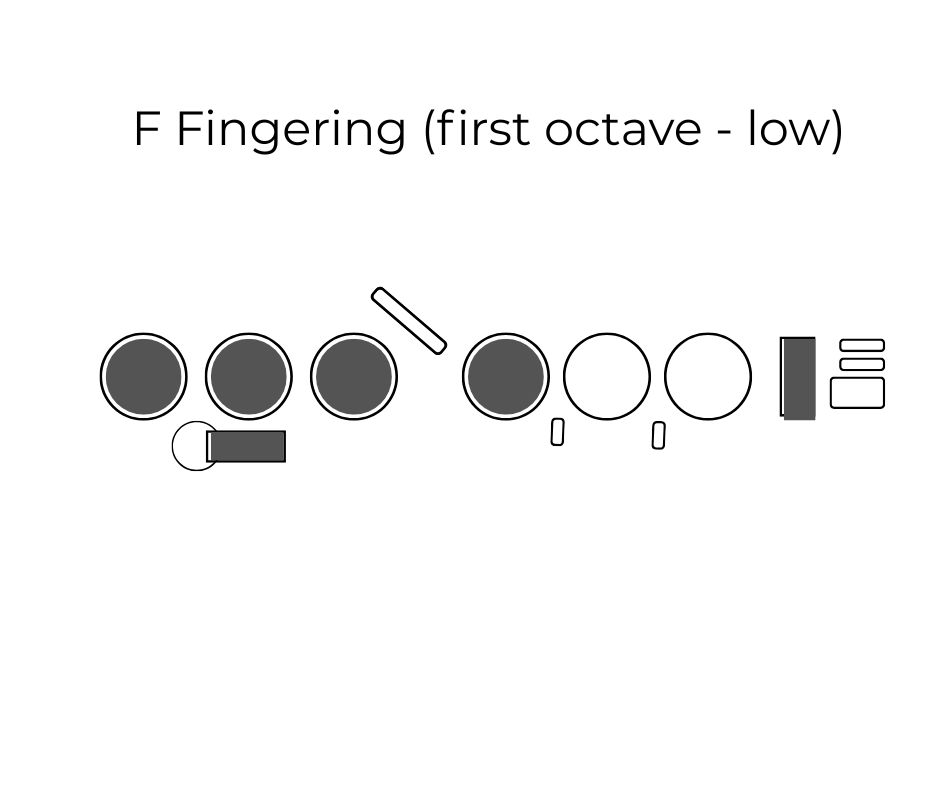
🎵 F
Fingering: Left-hand thumb (on the long key), 1st, 2nd, and 3rd fingers down. Right-hand 1st finger down. Right-hand pinky down.
This is the lowest F on the flute and a great place to begin.
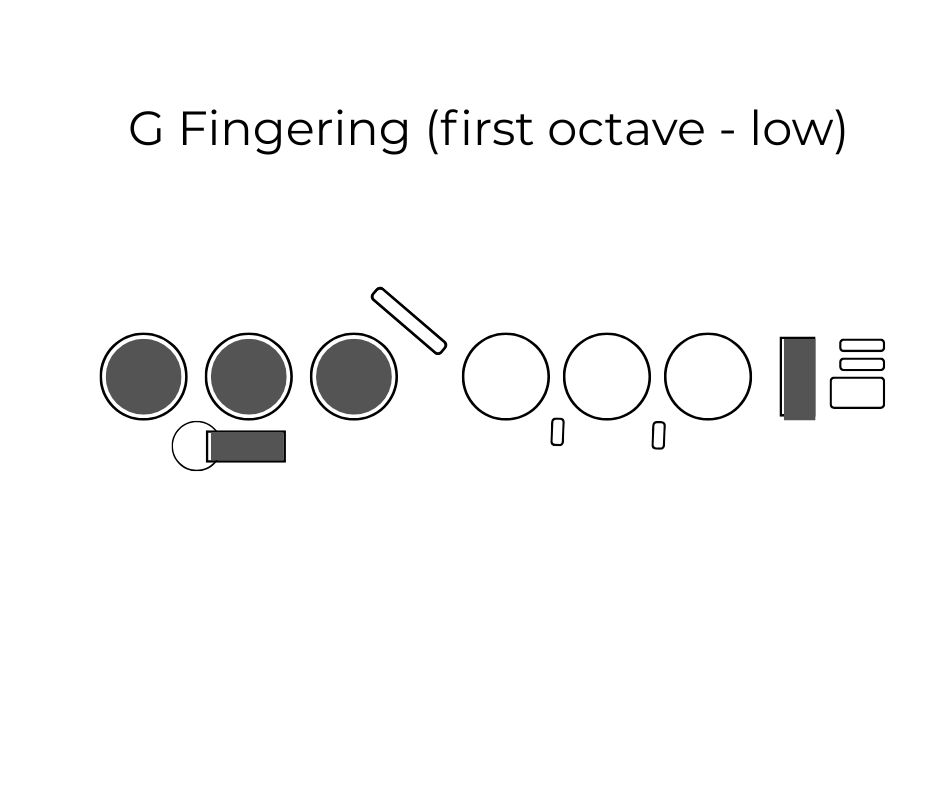
🎵 G
Fingering: ..from the F fingering, simply lift your right-hand index finger, leaving everything else the same.
You’re now playing G.
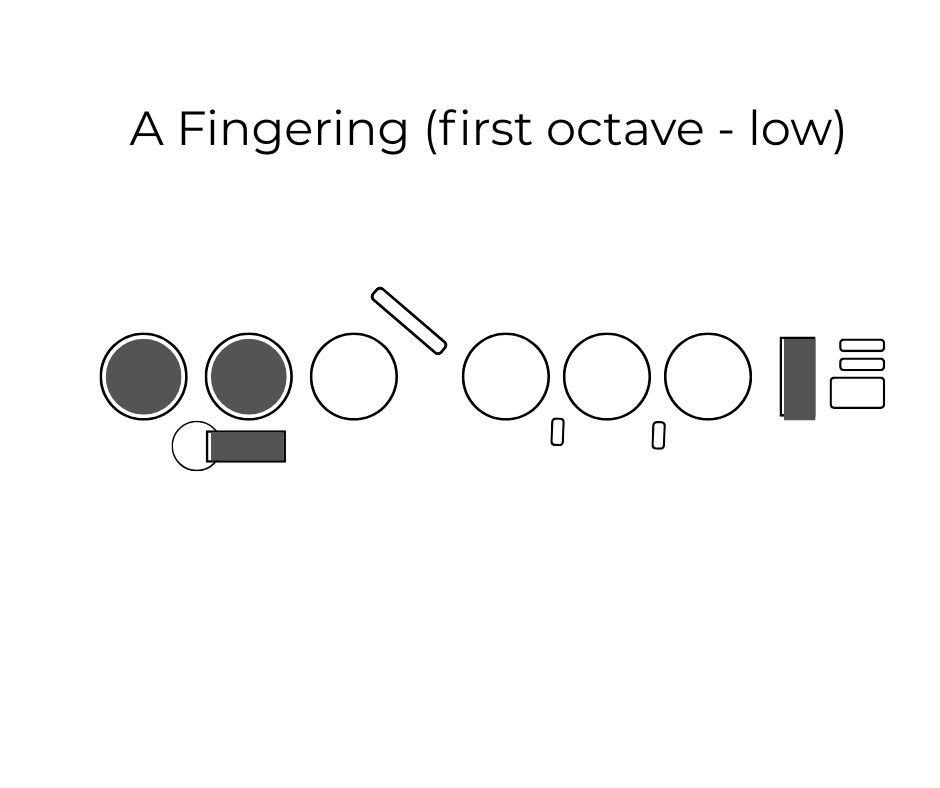
🎵 A
Fingering: Lift your right-hand middle finger. You’ll now be using:
Left-hand thumb, Left-hand 1st and 2nd fingers
Right-hand pinky.
Check your flute balance here as we use less and less fingers pressed on the flute.
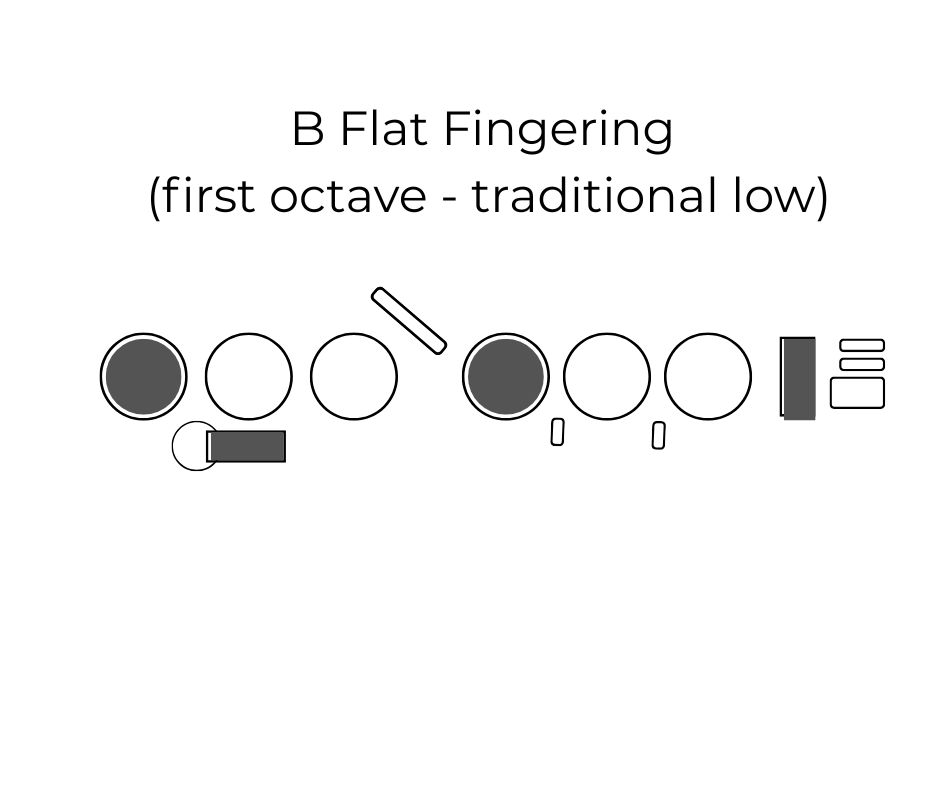
🎵 B♭
Fingering: This one is different. Use the traditional B flat fingering:
Left-hand thumb (on the long B key), Left-hand 1st finger
Right-hand index finger (F key), Right-hand pinky
I have an entire article with video to help you out with this B flat fingering – use the traditional one (not the B flat thumb) so you learn proper balance, and all of the notes you learn in these scales will make more sense in the order they are in.
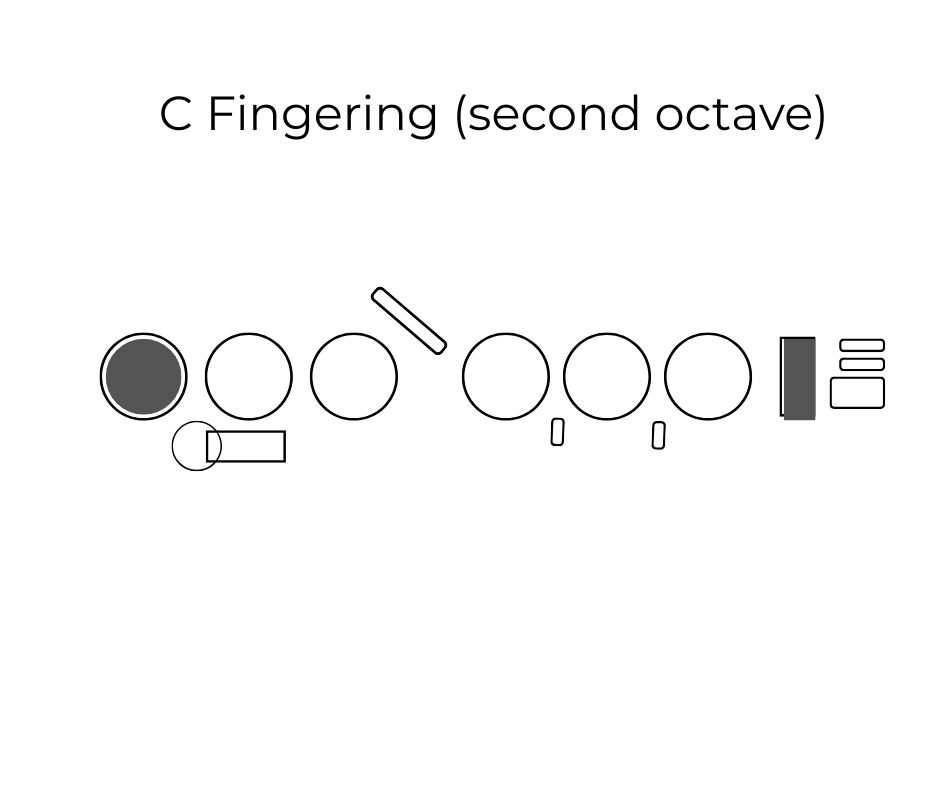
🎵 C
Fingering: Left-hand 1st finger only.
Take your left-hand thumb off and leave your right-hand pinky on.
Whoa. This change can feel unstable at first, so give yourself time to adjust while you learn and watch for proper alignment and balance skills inside the module lessons especially (*I’ll help you even more and how to keep pain out of your hands and shoulders also).
🎯 TIP: If you’re just getting started, stop here. Practice these first five notes (F–G–A–B♭–C) slowly and often. Going halfway up the scale builds confidence and gives your hands time to adjust to new finger patterns.
Move up the scale and then back down over and over and over – slowly. This is how we build good flute playing skills.
Remember that this can be your first or second scale learned, so enjoy it and be proud of yourself. The flute F major scale is a perfect way to learn loads of fundamental skills!
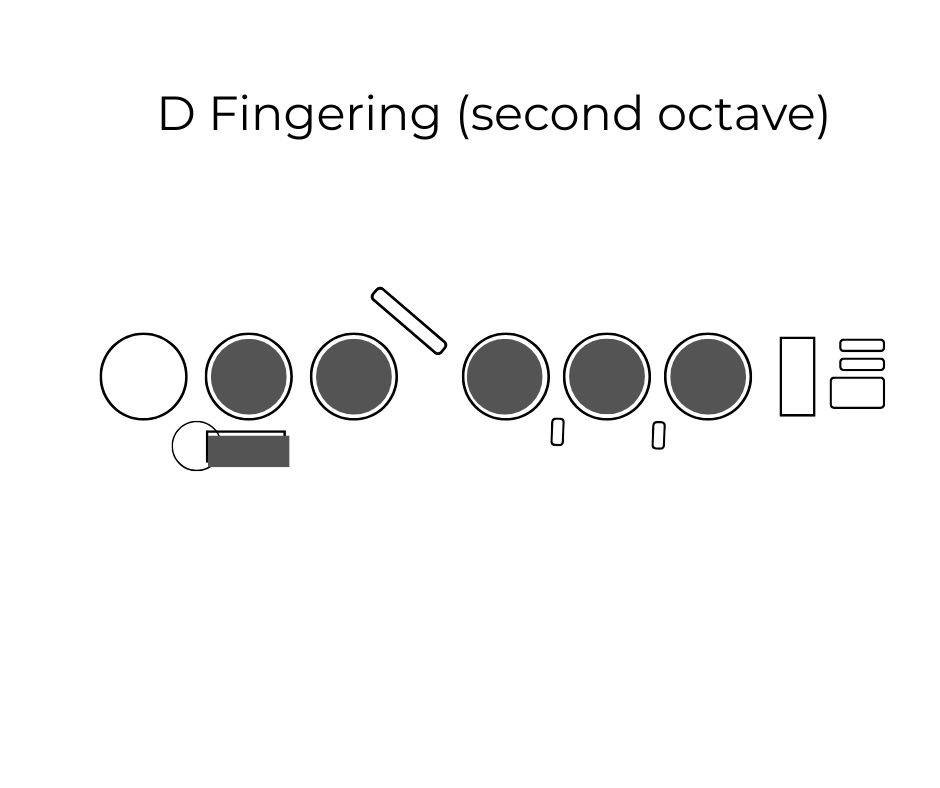
🎵 D
Fingering:
Left-hand thumb (long B key), Left-hand 2nd and 3rd fingers
Right-hand 1st, 2nd, and 3rd fingers
No pinky on this note.
*You might notice that this note sounds a bit more airy than the others so far. This is because our first key is up instead of down… for now press more air into the flute and you’ll find it sounds much better.
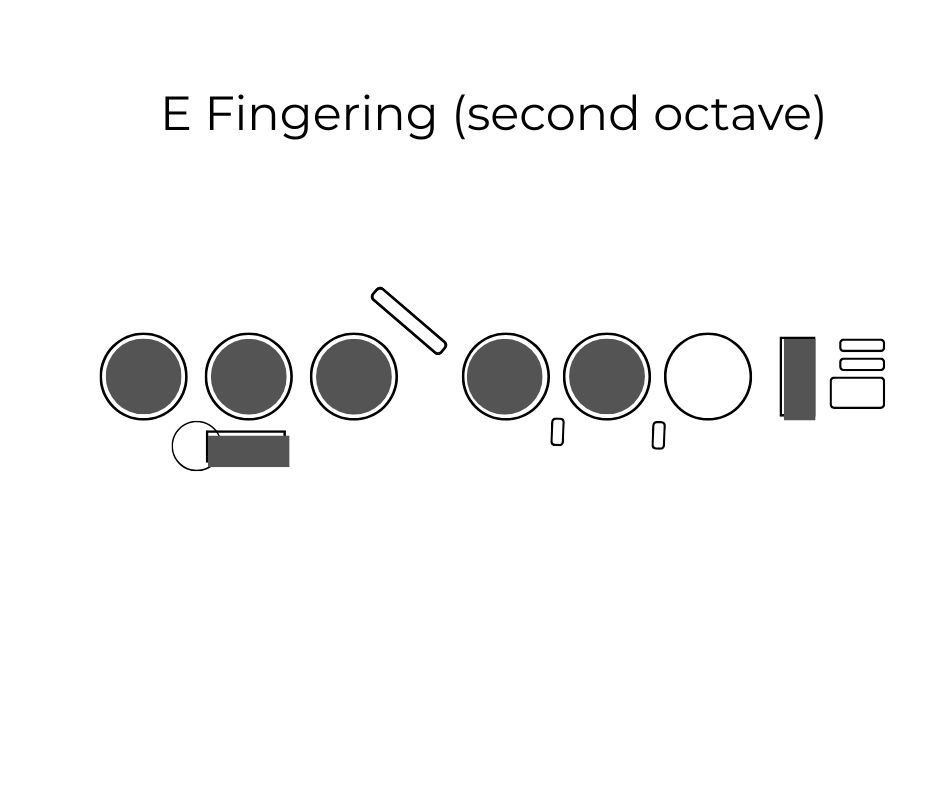
🎵 E Fingering:
Same as D, but:
Lift left-hand ring finger, lift right-hand ring finger, put your pinky back on.
This note is commonly ‘squeaky’. There are reasons for this. I can’t wait to show you why and how to fix it. Watch for specific module lessons on this inside the Gold level and also during our annual 10 Day Tone Workshop… because no one wants to be squeaky. 🙂
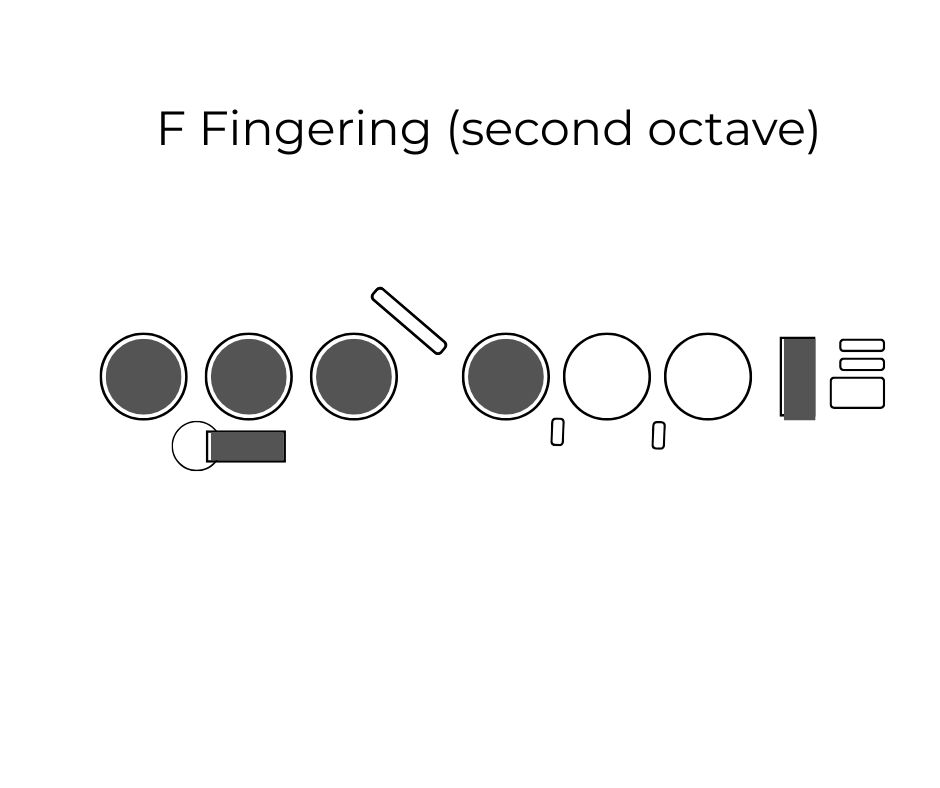
🎵 F (Octave)
Fingering: Same as your first note, low F.
The difference here is that you’ll blow faster air to move the pitch up an octave. This is a basic beginner skill- we’ll get more specialized as we progress through the lessons so you won’t have to just blow harder to get your notes out.
There are special techniques I’ll teach you so you can pop the higher octaves out without even hardly trying. It’ll be so great!
Practice Tip: Keep your flute in front of you where you can see it. Say the note names out loud as you look at your fingers and practice putting them on the right keys. This will give you another sense so you can memorize what to do more efficiently.
When I was a new player, I was asked to demonstrate this scale to the class. I knew it, but when I put my flute up to my mouth, I had something strange happen… my tongue went dry and my brain couldn’t even remember what I was trying to do. This was the first time I experienced a phenomenon known to flute players called ‘stage fright’. No worries, I conquered it and I’ll show you how to also!
How to Practice the Flute F Major Scale as a Beginner
Once you’ve learned the fingerings for the one-octave flute F major scale, the next step is to make it feel easy and natural. And that takes the right kind of practice: simple, slow, and consistent.
Here are a few ways to approach it:
Start With Just 5 Notes
If the full octave feels like too much right now, start by playing the first five notes only:
F – G – A – B♭ – C
This helps your hands adjust to the transitions, especially the move to B♭ and the balance shift required for C.
🎵 Try going up: F–G–A–B♭–C
Then back down: C–B♭–A–G–F
Repeat this slowly a few times each practice session for a week or two before moving to the full scale.
Slow = Smart
Play at a slow, steady pace. Don’t rush. Focus on:
- Placing fingers precisely
- Blowing and finding the right strength for the desired pitch
- Listening for smooth transitions between notes (hint: change your fingers between notes!)
Use a mirror if possible to check your positioning.
Use a Metronome (Optional)
Once you get to the stage where you can make your way through the scale, using a slow click (from a metronome) can help you keep a steady beat while you learn the movements even better. This isn’t necessary in the beginning but will be helpful to your skills as you gain efficiency in moving from note to note.
Listen First
Before playing, listen to a demo of the scale so you know what it should sound like. This builds ear training along with muscle memory.
You can watch and listen to the demonstration in my YouTube video embedded in this article.
🎵 As you build fluency, you can try playing the full octave:
F – G – A – B♭ – C – D – E – F
Then descend all the way back down to low F. (thinking backwards is a new trick!)
It’s okay to work on one section at a time. Repetition is your friend!