

Flute Instructions for Beginners: 2 Simple Tips to Progress
Starting the flute is exciting, and it opens the door to making beautiful music. At the same time, it can feel overwhelming to know where to begin. With so much information out there, beginners often wonder, “Am I doing this right?” The truth is that your success on the flute depends on building the right habits from the start.
In this article, I’ll share two important flute instructions for beginners (or returning beginners, or those who want to improve their playing.. No matter the level). These skills may seem simple, but they will make your learning smoother, your progress faster, and your playing more enjoyable in the long run. By focusing on air and hand position, you will set yourself up for success and avoid the frustrations that slow many players down. (way down)
And if you’d like to watch me demonstrate these skills in action, I’ve included a video on this page so you can see and hear exactly how it works in a quick to watch format.
Why Flute Foundations (like these tips) Matter
Picking up the flute for the first time often brings the excitement of jumping right into favorite songs. This enthusiasm is wonderful, yet lasting success comes from building strong basics first. The flute responds beautifully to good habits, and even small adjustments in air use and hand position can create noticeable improvements and make playing more rewarding.
The good news is that you do not need years of experience to start building strong habits. In fact, the earlier you learn them, the faster you will improve. They are simply skills that every beginner needs to understand. The sooner you practice them, the smoother your learning will be.
Think of it like laying a foundation for a house. Once the base is strong, everything else becomes easier to build. The same is true with the flute. By focusing on the right flute instructions for beginners, you give yourself the tools to create a clear sound, play with relaxed fingers, and grow into a confident musician.
This article just includes 2 specific flute instructions, and there are hundreds more inside the lesson modules of the Learn Flute Online member program where I have a literal library full of pre-recorded, step-by-step lessons and materials waiting for anyone wanting to learn and enjoy an easy process that leads to big success.
Flute Instruction #1 : Use Steady, Confident Air (for a few reasons)
The flute is a wind instrument, which means everything depends on air. One of the most important flute instructions for beginners is to learn how to blow with confidence. Many new players start by blowing too softly, almost like they are afraid of overpowering the flute. The result is a weak, fuzzy and flat sound that can feel discouraging.
The truth is that the flute is built for strong, steady air. If you do not give it enough, it simply cannot create a clear tone. When you use more air in the right way, your flute instantly responds with a fuller sound and better intonation.
Here is a simple way to practice:
Take a full breath in, filling from your lower lungs instead of just your throat. (ever thought of this before?)
Blow forward with direction, as if you are trying to make sure your air stream will end up floating across the room.
Keep the air stream steady. Imagine a ribbon of air moving in one smooth line.. so you’re not choppy and bumpy sounding.
If you blow too gently, you’ll have a flat pitch or airy tone (depending on what’s going on with your head joint position). When you use firm, supported air, the sound becomes strong and resonant.
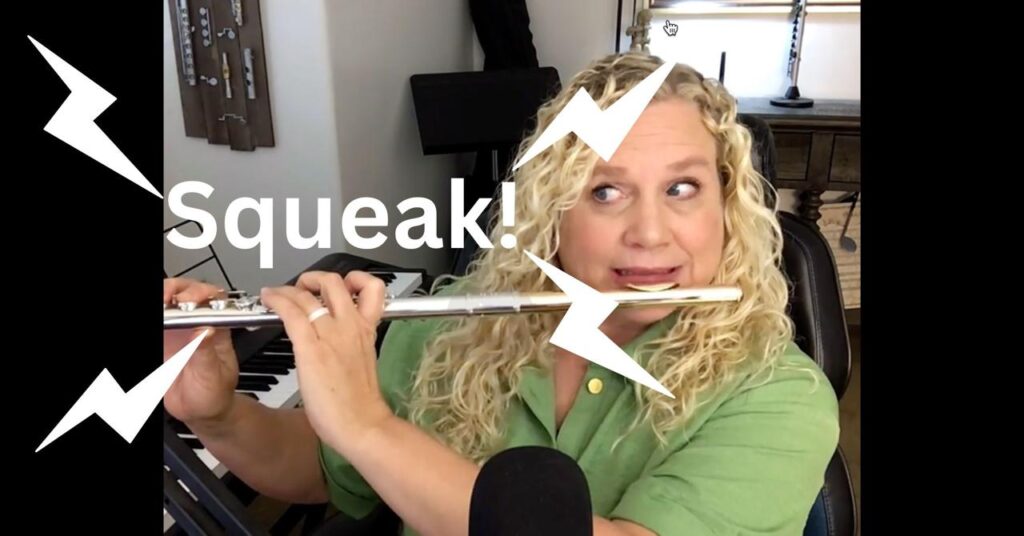
Worrying about squeaks?: squeaks usually happen when the flute is tipped towards you too much (depending on the note) or a couple of other factors. Think of making sure you have adequate space from your lips to the edge of the hole. If there isn’t enough, your sound will be small and squeak will happen as soon as you try to use more air. (eek) With the right position and posture, your air will produce a beautiful, open sound.
Practicing long tones is one of the best exercises to use while build this technique. Choose a single note, breathe deeply, and hold it as evenly and as long as you can. If you’re newer, this won’t be for very long, but no worries, over time and with good instruction and a real process, your breath control will improve, and you’ll have confidence that you’re moving in the right direction.
The idea is that you have time to focus on the task at hand until it becomes a habit.
Flute Instruction #2 : Relaxed Right Hand and Pinky
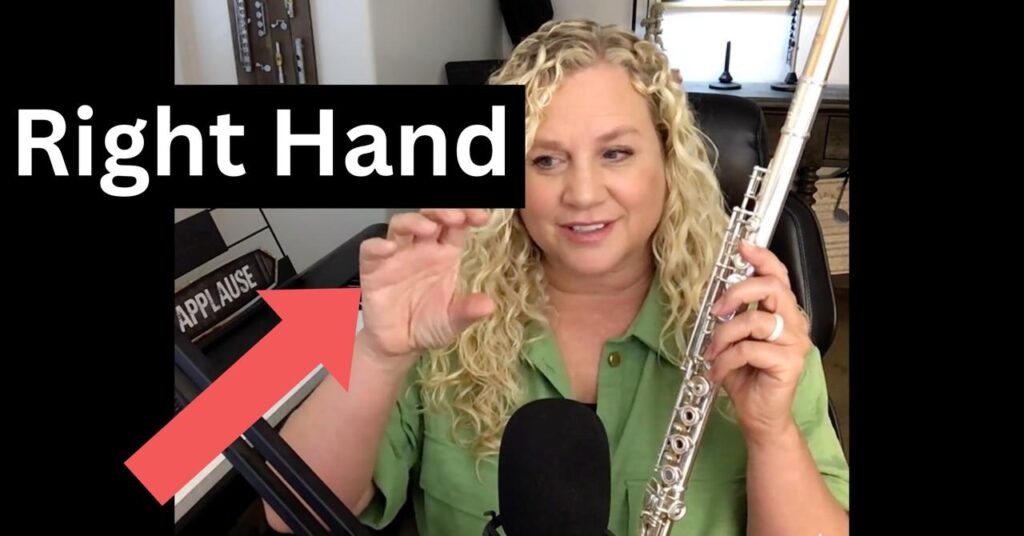
Another essential part of playing the flute well is learning how to use your hands in a natural way. One of the most helpful flute instructions for beginners is to keep your right hand relaxed and a little bit curved, especially the pinky finger.
Many new players try to hold the flute tightly, with stiff fingers or a pinky that sticks straight out or even bends backward at the knuckle. This creates tension, slows down finger movement, and can even cause small muscle injuries over time. When your hand is locked in this way, moving smoothly from note to note feels almost impossible.. In fact, it is one of the reasons for clunky and stiff sound.
Instead, think of your right hand position being as natural as possible. Hang your hand down by your side (right now… do it.. did you do it?) and let it relax as if it’s asleep. Next, bring your hand up so you can see it (don’t move a muscle). Guess what? This is perfect flute hand position!
So when we focus on what our right hand is doing on our flute, we can eliminate tension.. Which means we will have more potential for fluid, faster, easier playing.
This right hand position is kind of like the same position as gently holding a small glass. Your fingers should curve naturally, not pressed down with force. The pinky presses lightly on its key, moving with balance and ease. This small change allows your fingers to stay flexible, making fast passages and simple exercises feel much more fluid.
Here are a couple of quick ways to practice this skill:
Place your flute in playing position, and check that your right hand feels curved, not flat or stiff. Actually look at it with your eyes. Play a little bit and then look again. Did your right hand pinky shift and become stiff and straight?
Practice moving just your pinky up and down slowly on the key, making sure it bends at the knuckle instead of locking straight. Look at it. Do it again and again (looking at it). Play a little bit without looking and then double check it in your thoughts. Did it straighten again?
Play a short scale or simple melody while focusing only on keeping the hand loose and natural. Keep this type of skill-focus to the first part of your practice session. Remember that you won’t be perfect in fixing a habit like this one in just a few minutes, but if you keep at it and put your attention and focus on it for even a short time daily, it’ll start to come around. Yay!
Over time, this relaxed hand position will save you from fatigue, tension, muscle injuries (this is a real thing) and help you become a more fluid and efficient flute player. When combined with the steady air skill we talked about at the first of this article, it creates the foundation you need to progress quickly and play with confidence.
Frequently Asked Questions
What are the first things a beginner should learn on the flute?
Learning to balance the flute properly is a HUGE deal. If you started out on your own, in band, or anywhere that didn’t help you get this right, it’s time to dive in and do this. Proper balance means you’ll have great tone and fluency in the long run.
The next thing I’d say is a first thing to learn on the flute is that learning the notes in a proper first order (for flute players) is kind of a big deal. Beginning band programs get this wrong because they’re focused on the group as a whole.. So the clarinet skills win in the band books. (more on this another time)
And, like this article shows, two important flute instructions for beginners are learning how to use steady, confident air and how to keep your hands relaxed, especially the right hand and pinky. These two skills set the foundation for a clear tone, faster fingers, and comfortable playing. (common mistakes)
Why does my flute sound airy or fuzzy when I play?
An airy or fuzzy tone can happen for different reasons. A flute that’s not in great shape is one of them, but if your flute has been deemed perfect, then often it comes from using too big of an aperture (the hole in your lips) or a combination of this and blowing too softly. (more on all of this in other areas of Learn Flute Online.. Especially in the members area where the Gold Level takes you through all of the skills needed for an amazing foundation to flute playing).
How do I hold the flute correctly as a beginner?
I have whole videos and lessons to help you with this one especially in the members area.. Because this is super important!
Know that your fingers should curve naturally, not pressing down tightly with stiffness. The right hand pinky should press the key without being in a straight and stiff (or even bent backwards) position. When your hands feel balanced and relaxed, your flute will feel easier to manage and play.
How much should a beginner practice the flute each day?
Consistency is more important than long sessions. Even 10-15 minutes of focused practice each day will help you make progress. Short, regular sessions train your body and mind to build new habits without tension. As you grow more comfortable, you can gradually extend your practice time.
I know the flute is a very exciting instrument, and at first you’ll be tempted to practice for hours, assuming that this will only make you better. But, the reality is that our small, fine muscles aren’t used to this and flute playing injuries can and usually will happen with too much at first. So, keep your practice sessions kind of short, and work up a little longer like an athlete would.
Can you learn flute without a teacher?
Yes, up to a certain point, but it is much, much easier (and way better) with step-by-step guidance.
Many beginners struggle with tone, hand position, and reading music when they try to learn on their own. Having organized lessons, demonstrations, and feedback saves time and frustration. This is exactly what I provide inside the Learn Flute Online members area. And it’s the fastest way to learn to play the flute on the planet! (spoken with confidence)
Conclusion
Learning the flute is a journey, and the best way to enjoy it is to build smart habits from the very beginning. These two flute instructions for beginners: using steady, firm or more confident air and keeping the right hand (pinky especially) relaxed may seem simple, but they make a powerful difference in how quickly you progress.. Especially in the long run.
With firm air support, your tone becomes stronger and clearer and you won’t find a need to position the head joint unnaturally. With a relaxed hand and pinky, your fingers move more easily and naturally. Together, these skills create part of a nice foundation for everything else you will learn on the flute.
Remember, every small improvement adds up. By practicing these basics now, you are setting yourself up for success in the long run.
If you are ready (I hope you are) to continue and want everything organized step by step, come join me inside the Learn Flute Online members area. You will find lessons (organized in easy-to-follow modules), exercises, and encouragement designed for beginners, all waiting for you. It is the perfect place to grow your skills and discover just how fun playing the flute can be.