

Airy Flute Tone: Easy Fixes for Beginners
Introduction
If you have ever picked up your flute, played a note, and wondered why it sounds fuzzy, unclear, or full of extra air, you are not alone. Almost every beginner runs into this problem, and it can feel frustrating when the sound coming out of your instrument does not match the beautiful tone you imagined. The good news is that an airy flute tone is one of the most common beginner challenges, and it is also one of the easiest to fix once you know the steps.
In this guide, you will learn exactly why your flute might sound airy, what causes that fuzzy tone, and how to fix it step by step. We will cover everything from checking the condition of your instrument to shaping your lips (embouchure) the right way and placing the flute in the correct spot on your face. Each step is simple to follow and designed specifically for beginner flute players who want a clearer, purer sound.
You will also discover extra practice tips, common mistakes to avoid, and even a few fun exercises to help you build confidence. And if you want to go even deeper, remember that inside the Learn Flute Online Members Area, I give you step-by-step lessons that guide you through tone building, technique, and even advanced skills like vibrato. This way, you can avoid bad habits and enjoy playing the flute with a beautiful sound from the very beginning.
By the end of this article, you will not only understand why your flute sounds airy, but you will also know exactly what to do to fix it. So let’s get started on turning that airy flute tone into the clear, rich sound you have always wanted.
Step 1: Check Your Flute Condition
One of the first things to look at when you are struggling with an airy flute tone is the condition of your instrument. Even if you practice every day, a flute that is not sealing properly will make it nearly impossible to create a clear, pure sound.
Why Flute Condition Matters
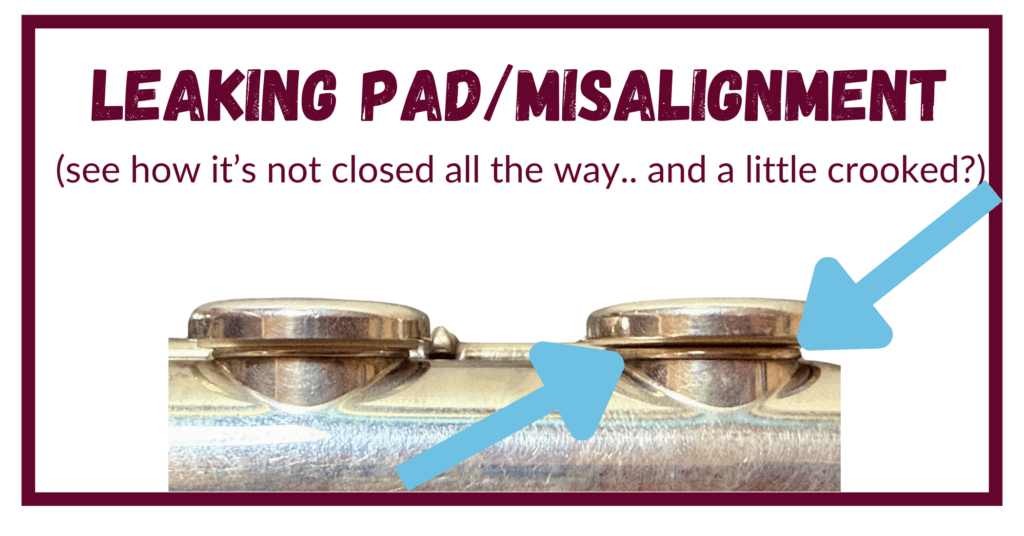
The flute is a delicate instrument with pads, springs, and keys that need to be in top shape. If the pads are worn out, cracked, or leaking, they will allow air to escape instead of sealing tightly. This means part of your air stream is being lost before it can even create sound inside the flute. Even the best flutists will sound fuzzy or airy on an instrument that is leaking.
This is often one of the most overlooked causes of an airy tone. Beginners sometimes blame themselves, thinking their lips or breathing are wrong, when in fact the problem is with the flute itself.
Quick Leak Test You Can Try at Home
Here’s a simple way to test your flute:
- Close a key with your finger.
- Gently press around the pad while blowing lightly.
- If you feel or hear air escaping, it may be time for a repair or adjustment.
You can also hold the flute up to the light and close the keys one at a time. If you see light shining through the pad area, that is another sign the pads are not sealing properly.
When to Get Your Flute Serviced
If you suspect your flute has leaks or worn pads, it is a good idea to take it to a qualified repair technician. A simple adjustment can make a world of difference in your sound. For students using very old or hand-me-down instruments, replacing pads or upgrading to a newer flute may completely eliminate the airy flute tone problem.
Helpful Resource
For more details, you can also check out my podcast episode on Beginner Flutes vs. Professional Flutes – What’s the Real Difference? to understand how instrument quality impacts tone.
Step 2: Adjust the Size of Your Aperture
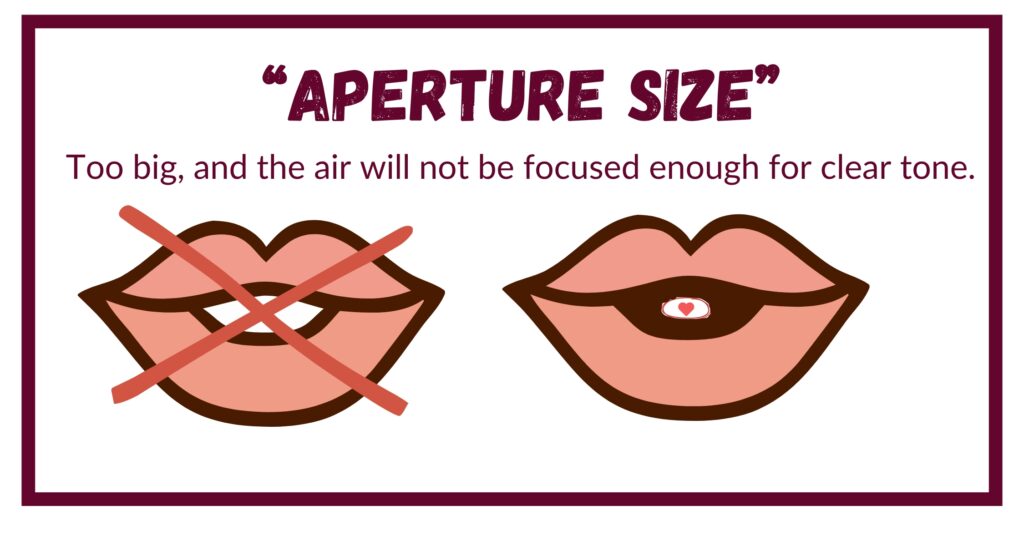
Another major reason flutists experience an airy flute tone is because of the size and shape of the embouchure hole they make with their lips. The aperture is the small opening where the air escapes between your lips and into the flute.
Why Aperture Size Matter
If the hole in your lips is too large, your air spreads out and loses focus. Instead of directing the air in a precise stream onto the sharp edge of the flute’s embouchure hole, the air slaps against the lip plate in all directions. The result is a fuzzy, airy sound instead of a clear, resonant tone.
On the other hand, if your embouchure is too tight or pinched, the tone can sound choked, weak, or unstable. The key is balance.
A Simple Embouchure Exercise to Fix Airy Flute Tone
Try this easy exercise:
- Shape your lips as if you are gently saying “pooh.”
- Make a small, round opening in the center of your lips.
- Blow a steady, diagonal stream of air across the embouchure hole of the flute.
The goal is to keep the air focused, not spread out. Imagine your air is like a laser beam instead of a spray bottle. When the air stream is sharp and directed, your sound becomes clear and beautiful instead of airy.
Practicing Focused Air Control
You can practice this even away from your flute:
- Blow lightly on your hand. First, make the air spread out with a big hole in your lips, then make it smaller and feel how the air stream becomes stronger and more focused.
- Switch back and forth to train your lips to adjust the embouchure quickly.
By developing this control, you’ll eliminate much of the airy flute tone that comes from an unfocused air stream.
Common Mistake to Avoid
A common beginner mistake is blowing straight down into the flute or too far over the top. Both extremes make your tone airy. The sweet spot is when your air splits right on the far edge of the embouchure hole.
Step 3: Correct Your Lip Plate Placement
Even if your flute is in good condition and your aperture is the right size, you may still struggle with an airy flute tone if your lip plate placement is off. Beginners often overlook this detail, but it makes a huge difference in how your sound forms.
Why Lip Plate Placement Matters
The flute’s lip plate needs to sit in just the right spot on your chin to create a clear tone. If it is too high or too low, your airstream cannot interact with the embouchure hole properly. This leads to wasted air and an airy, fuzzy sound.
The sweet spot is when the inside edge of the lip plate rests exactly where your bottom lip ends and the skin of your chin begins. It should feel natural and balanced.
- Too high: If the lip plate sits too high, there is not enough room between your lips and the air hole. Your airstream will hit the wrong part of the flute and the tone will not form clearly.
- Too low: If the flute slides too far down your chin, the air sprays out instead of focusing. This creates that frustrating airy flute tone beginners know all too well.
A Simple Placement Check
- Stand in front of a mirror with your flute.
- Place the flute on your chin and roll it slightly until the inside edge of the lip plate touches the very bottom of your lip line.
- Blow across the hole and listen for a clean tone.
- Make small adjustments until you hear the strongest, clearest sound possible.
It may take a bit of experimenting, but once you find your personal “sweet spot,” you will notice your sound becoming stronger and less airy almost instantly.
Practice Tip for Beginners
If you are having trouble finding the placement, try this:
- Place the flute a little too high and play a note.
- Then place it a little too low and play again.
- Notice the difference and find the balance point in the middle.
Repeating this exercise will train your muscles and memory so that correct placement becomes automatic.
Common Mistake to Avoid
Do not press the lip plate too firmly into your chin. Many beginners push too hard, which not only feels uncomfortable but also restricts flexibility in your embouchure. A gentle, natural contact works best.
By mastering your lip plate placement, you will eliminate yet another cause of the airy flute tone and move closer to a clear, confident sound.
Wrap-Up: Bringing It All Together
An airy flute tone is one of the most common challenges for beginners, but now you know exactly what to do about it. Remember these three simple steps:
- Check your flute’s condition: Make sure your pads are sealing properly and your instrument is not leaking air. Even the best flutist will sound airy on a flute that needs repair.
- Focus your embouchure hole: Keep your lip opening small, rounded, and controlled so that your airstream is directed right to the edge of the flute’s embouchure hole.
- Place your lip plate correctly: Find the sweet spot on your chin where the tone comes out clear and strong, without wasted air.
By putting these three fixes into practice, you will notice your sound transforming from fuzzy and unclear to focused and beautiful.
Why Fixing Airy Flute Tone Matters
Improving your sound is not just about playing prettier notes. A clear tone boosts your confidence, helps you progress faster, and makes practicing more enjoyable. The flute should feel rewarding to play, not frustrating. Solving the airy flute tone is your first step toward creating music that inspires you and those who hear you.
Take the Next Step with Learn Flute Online
If you want even more help perfecting your flute sound, I invite you to join me inside the Learn Flute Online Members Area. You will find step-by-step video lessons that cover flute tone, embouchure, vibrato, finger technique, and so much more. You can start free at LearnFluteOnline.com, and then continue into the Gold Level for the full foundational program.
Inside the Learn Flute Online modules, I guide you through each technique carefully, making sure you avoid bad habits that can cause issues like an airy flute tone. The best part is that you can learn from the comfort of your own home, at your own pace, on your own schedule.
Your Turn
Now it is time to put these tips into practice. Try each step, notice how your tone improves, and keep building on your progress. Be sure to leave a comment below sharing what you are working on and what success you have had fixing your airy flute tone.
You are on your way to sounding better than ever, and I cannot wait to help you take the next steps in your flute journey.
Additional Tips to Clear Up an Airy Flute Tone
We’ve already covered the three biggest fixes for an airy flute tone: checking your instrument’s condition, focusing your lip opening, and placing the lip plate correctly. Here are a few quick reminders of other things that also make a difference:
- Keep your air steady and supported (not forced).
- Relax your face, jaw, and shoulders before you play.
- Try short headjoint-only practice sessions.
- Use a mirror or recording for instant feedback.
- Keep your flute well maintained with regular check-ups.
If you’d like to dive deeper into any of these, I’ve linked to my other videos and articles that explain them step by step.
Conclusion
Remember, an airy flute tone is something every beginner faces. It just means you’re learning how to balance your air and embouchure. The good news is that with consistent practice and a few adjustments, your tone will become clearer and more beautiful every day.
Inside Learn Flute Online, I’ve organized everything in perfect order for you, so you’ll always know exactly what to work on next. You can start free in the Silver Level, then move into the Gold Level when you’re ready for the full foundation.
Your flute journey should feel joyful, motivating, and inspiring.. and I’d love to guide you all the way.